How to Share Your Faith With Your Children
Without making it feel forced.
A practical guide to making faith part of ordinary family life. through conversations, questions, prayer and the way our children see us live.
By Damilola Adeniregun · 8 min read
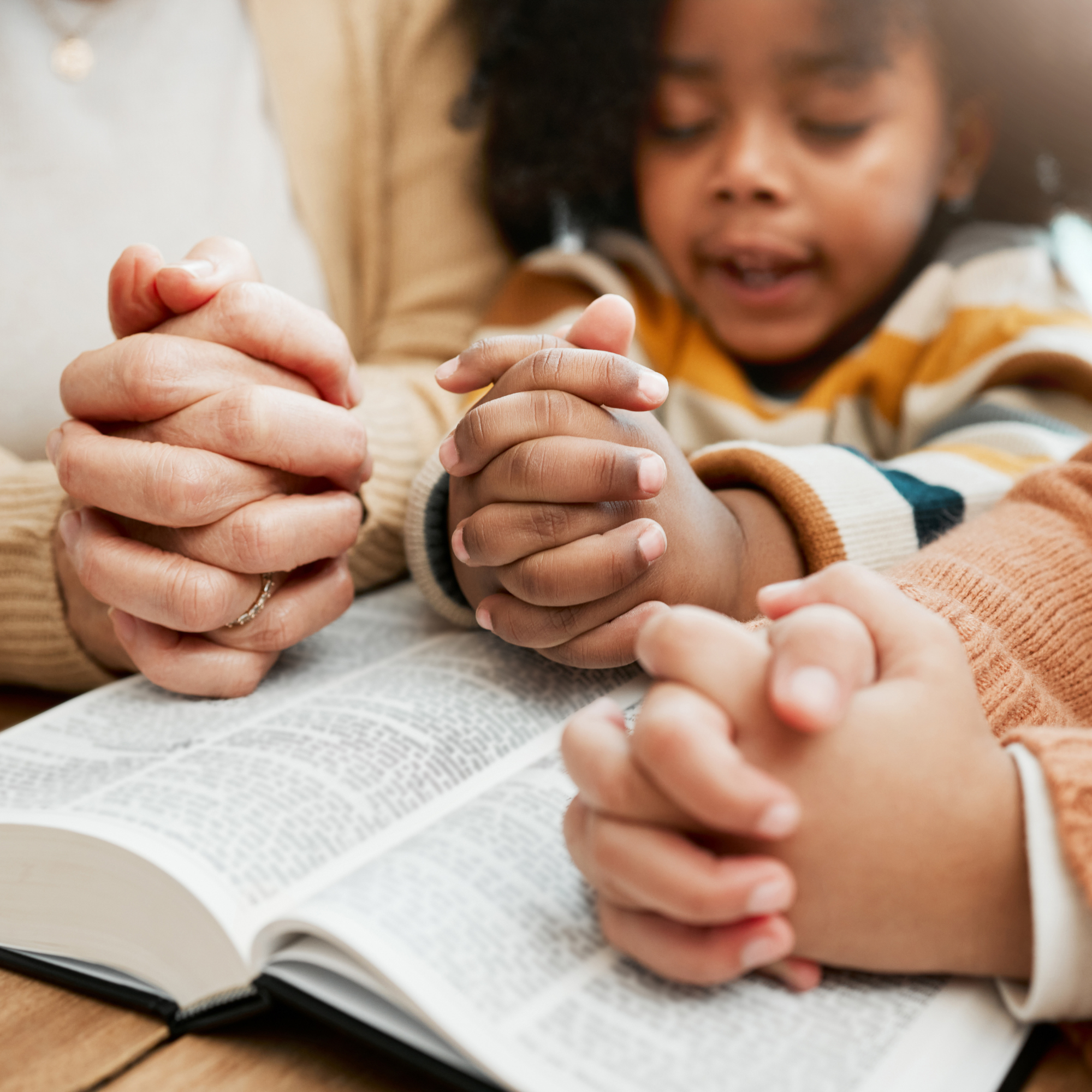
One of the things I think about a lot as a Christian mother is this:
How do I make sure my children actually know God for themselves?
Not just church.
Not just Bible stories.
Not just how to sit nicely during service, close their eyes during prayer and answer “Jesus” when they aren't quite sure what the Sunday school teacher asked.
I mean God.
How do I help them grow up knowing that Christianity isn't simply something Mummy and Daddy do? That prayer isn't a performance. That the Bible isn't just a collection of stories for children. That Jesus isn't a character they learn about alongside Noah, Moses and David.
He is their Saviour.
And ultimately, there comes a point where their faith has to become theirs.
I cannot believe for my children.
I cannot build their relationship with God for them. But I can create a home where knowing God is normal.
And I think that's where it starts.
1. Let them see it
Children notice everything. Absolutely everything.
They notice what excites us, what annoys us, where we run when we're worried and what we prioritise. They notice whether Christianity exists only on Sunday morning or whether God is actually part of our everyday lives.
Sometimes sharing your faith with your children isn't saying anything particularly profound. It's them hearing you say, “Let's pray about it.” It's seeing you read your Bible, thanking God when something goes well, or hearing you apologise when you get something wrong.
“Mummy was wrong. I'm sorry. God is still working on me too.”
That last one matters.
I don't want my children growing up thinking Christians are people who never get things wrong. I want them to understand that Christians are people who continually turn back to God.
Our children will learn plenty from what we tell them.
But they will also learn from the Christianity they actually see.
2. Talk about God naturally
Faith doesn't always need an activity sheet.
Sometimes it just needs a conversation.
The beautiful thing about children is that ordinary life gives us hundreds of opportunities to talk about God without announcing, “Right everyone, we are now having a spiritual moment.”
You can be walking home from school and see an incredible sunset. Your child can be nervous about something the next day. Someone may have been unkind. They might repeat something they've heard at school, read in a book or seen online.
Those moments are already there.
We just learn to notice them.
FAITH CAN SOUND LIKE...
“Wow. Look at what God made.”
“Do you know what? Let's ask God to help you.”
“What do you think Jesus would want us to do here?”
“What do we believe about that?”
These conversations don't have to last thirty minutes.
Sometimes they last thirty seconds.
But thirty-second conversations repeated over years create something powerful. They teach our children that God belongs in real life.
Not just church life.
3. Tell them why you believe
This is something I think Christian parents can sometimes forget.
We tell children what we believe.
But do we tell them why?
Tell them your testimony. Obviously, make it age appropriate, but let them know that your Christianity has a story.
Tell them about prayers God answered. Tell them about times you were scared and trusted Him. Tell them about things you're still praying about. Tell them why you believe the Bible. Tell them why you chose to follow Jesus.
Let them understand that your faith isn't simply something you inherited and never questioned.
Our children should not grow up thinking Christianity is simply a family tradition that appeared from nowhere.
They should know:
Mummy actually believes this.
And here's why.
As they get older, those conversations can grow with them.
They don't need every detail of your testimony when they're five. But they can know that God has been real in your life.
And eventually, when they begin asking why they should believe, they already know that asking why is allowed.
4. Make room for questions
Children ask questions.
Lots of them.
And sometimes the questions are uncomfortable.
Where is God?
Why can't I see Him?
Why did God let that happen?
How do we know the Bible is true?
Why doesn't everybody believe in Jesus?
Did dinosaurs live before Adam?
What happens when people die?
And occasionally:
“But how do you KNOW?”
Please don't panic.
Questions are not rebellion. Questions are often the beginning of understanding.
I would much rather my daughters ask me difficult questions while they are young than secretly assume Christianity cannot handle difficult questions when they are older.
And you don't need to know every answer.
You can genuinely say:
“That is such a good question. I don't actually know. Let's find out together.”
That teaches them something too.
Faith isn't pretending to know everything.
And I think there is something incredibly valuable about a child knowing that they can bring their questions home. They don't have to hide doubt from us. They don't have to pretend something makes sense when it doesn't.
Our homes can become safe places to wrestle with truth.
5. Let them practise faith
Children learn by doing.
So rather than allowing them to spend their entire childhood watching adults practise Christianity, give them opportunities to participate in it.
Let them...
Pray
Even if the prayer is seven seconds long.
Choose worship
Let them choose the song in the car or while you're getting ready.
Read Scripture
One verse is enough.
Give
Let them understand why we give, not simply watch you do it.
Serve
Let them help prepare something for church, help someone or bless another family.
Pray for other people
Their teacher. Their friends. Their grandparents. Someone who is sick.
Ask questions
Participation doesn't only mean doing. It means thinking too.
Faith becomes far more meaningful when children aren't simply watching adults practise it.
They become participants.
And they do not need to perform it perfectly.
A child's prayer doesn't need adult vocabulary to reach God.
6. Let faith be joyful
This one is important to me.
Faith should be taken seriously.
But that doesn't mean every faith activity needs to feel serious.
Children can laugh while learning Scripture.
They can paint.
Build.
Cook.
Go outside.
Sing badly.
Act out Bible stories.
Make prayer jars.
Have ridiculous Bible quizzes.
Look at stars and talk about creation.
Make cards for someone who's sick.
Christianity is not made more holy because children are bored.
Joy is allowed.
Actually, joy should be part of it.
And while we're doing all of this, we should still make sure we're teaching them the Bible rather than turning every Bible story into nothing more than a nice moral lesson.
David and Goliath isn't simply “be brave.”
Noah's ark isn't simply “obey.”
Daniel isn't simply “stand up for what you believe.”
Those lessons can be useful, but Scripture is ultimately revealing God . His character, His holiness, His mercy, His justice, His faithfulness and His plan of salvation.
So as we tell the stories, let's keep bringing our children back to the bigger questions:
What does this show us about God?
What does this show us about people?
What is God doing here?
How does this fit into the bigger story of the Bible?
Because the goal isn't simply raising nice children who know Bible stories.
The goal is Christ.
And then, pray
we can teach
we can model.
we can create routines.
we can answer questions.
we can take them to church.
we can buy the children's Bible.
we can print the worksheets.
we can create beautiful family traditions.
But ultimately, we can not manufacture our children's relationship with God.
So I pray.
I pray that my children encounter God personally. That they recognise His voice. That they love truth. That when Christianity is challenged, they don't panic.
I pray that they know what they believe and why they believe it.
And I pray that one day their relationship with God becomes deeper than anything I could have created for them.
Because I don't simply want children who know how to look Christian.
I want children who know Christ.
Start small
If faith hasn't been a huge part of your family routine until now, you do not need to reinvent your household by Monday.
Start with one thing.
A Bible story before bed.
A prayer on the school run.
A worship song while making breakfast.
One question over dinner:
“What are we thanking God for today?”
Small things done consistently become rhythms.
And rhythms eventually become culture.
I don't need my home to look like a Bible college.
I just want my children to grow up in a home where God was never strange. Where prayer was normal. Where Scripture was normal. Where questions were welcome. Where they saw imperfect parents genuinely trying to follow Jesus.
I cannot believe for my children.
I cannot build their relationship with God for them.
But I can create a home where knowing God is normal.
And perhaps one day, their faith will no longer simply be the faith of Mummy and Daddy.
It will be theirs.